
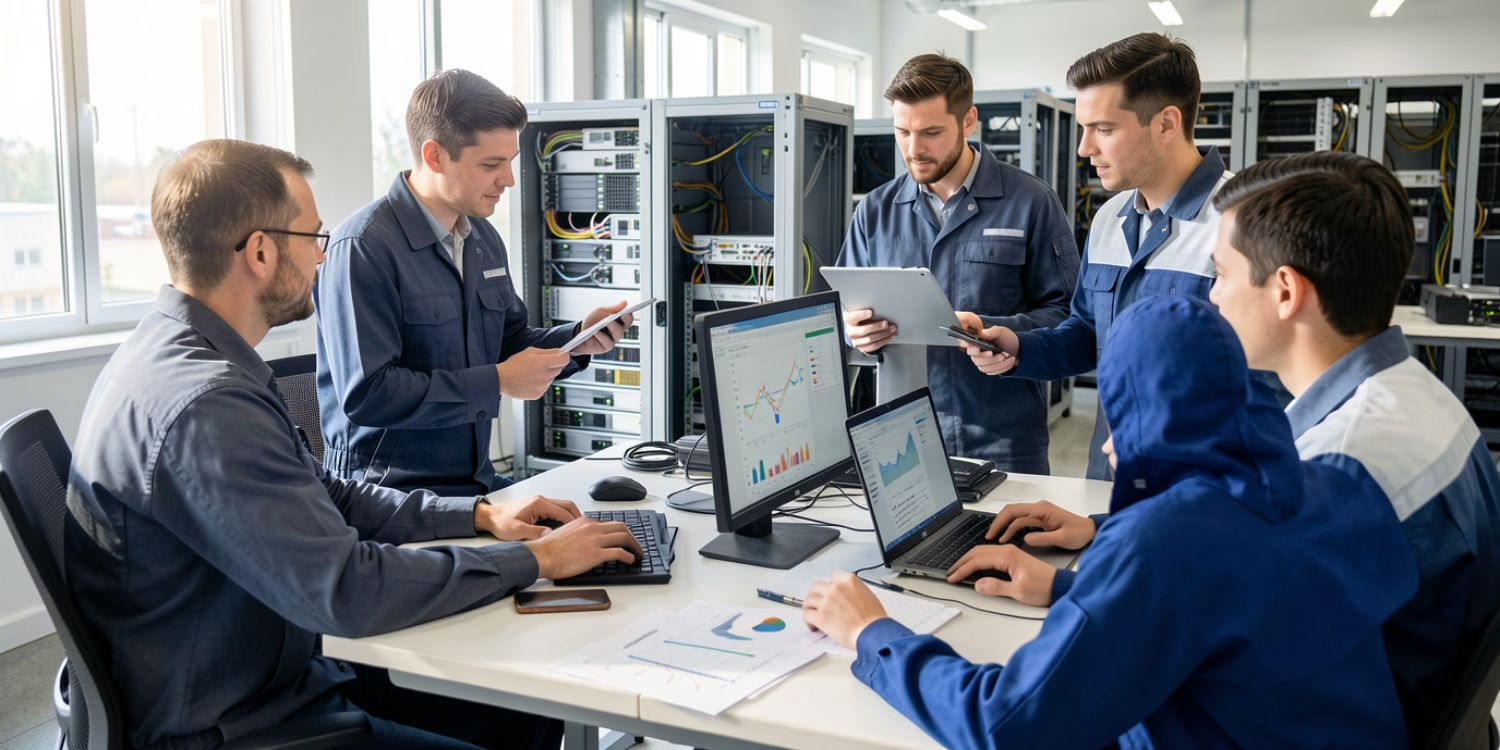
Manufacturing companies rely on precise coordination between technology systems and production processes. However, many manufacturing firms struggle to align IT with production goals, creating inefficiencies that slow operations and increase costs. When IT infrastructure fails to support manufacturing workflows, the gap between operational needs and technological capabilities becomes clear.
To stay competitive, manufacturers must integrate digital systems, production technologies, and data-driven insights. Without proper alignment between IT strategy and production objectives, organizations may face delays, reduced productivity, and limited scalability.
Why Manufacturing Firms Struggle to Align IT With Production Goals
Why would manufacturing firms struggle to align IT with production goals? To answer this, it starts with examining the disconnect between IT and operational teams. In many cases, companies develop technology strategies without involving production planning. This leads to systems that don’t fully support the manufacturing process.
Unfortunately, several common challenges contribute to this issue.
1. Legacy Systems That Limit Flexibility
Many manufacturing facilities still rely on older software or hardware systems that they deployed years ago. While these systems may still function, they often lack the flexibility needed to support modern production technologies.
Legacy systems can cause problems such as:
- Limited integration with new manufacturing software
- Difficulty accessing real-time production data
- Increased maintenance costs
- Reduced system performance
As a result, when outdated systems remain in place, it becomes difficult to connect IT initiatives with production improvements.
2. Lack of Real-Time Data Visibility
Modern manufacturing relies heavily on data, including machine performance metrics and supply chain updates. However, when IT systems don’t integrate with production tools, manufacturers struggle to access accurate, real-time information.
Without clear data visibility, production teams may face:
- Delayed decision-making
- Inefficient scheduling
- Missed opportunities for process optimization
- Difficulty identifying equipment issues early
Therefore, connecting IT infrastructure with production systems allows manufacturers to monitor operations more effectively.
3. Communication Gaps Between IT and Operations
Manufacturing firms often struggle to align IT with production goals due to limited collaboration between IT and operational leaders. IT teams often focus on maintaining infrastructure, while production managers prioritize efficiency and output.
Consequently, when teams limit communication, technology initiatives fail to reflect operational priorities. Strong collaboration ensures that IT investments support manufacturing processes rather than creating additional complexity.
4. Challenges Integrating New Technologies
Manufacturers are increasingly adopting technologies such as automation systems, IoT sensors, and advanced analytics tools. While these innovations can improve efficiency, their integration into existing IT environments can be challenging.
Without a clear strategy, companies may experience:
- Compatibility issues between systems
- Data silos across platforms
- Security vulnerabilities
- Implementation delays
For this reason, successful integration requires a strategic approach that aligns IT architecture with production technologies.
5. Cybersecurity Concerns in Industrial Environments
Manufacturing environments are becoming more connected, which also increases exposure to cyber threats. Organizations must protect industrial control systems, IoT devices, and networked production equipment against unauthorized access.
Security challenges can include:
- Vulnerabilities in connected machinery
- Outdated security protocols
- Limited monitoring of production networks
- Lack of employee cybersecurity training
Therefore, organizations must balance production efficiency with strong security practices to protect their operations.
The Importance of Strategic IT Planning in Manufacturing
Addressing these challenges requires a comprehensive IT strategy tailored to manufacturing operations. When IT systems align with production goals, organizations gain greater visibility, efficiency, and resilience.
Effective IT strategies typically focus on:
- Integrating production systems with business applications
- Improving real-time data access
- Strengthening cybersecurity protections
- Supporting scalable infrastructure for growth
- Enhancing collaboration between IT and operational teams
With this foundation, manufacturers can optimize processes and respond more quickly to market demands.
Building a Stronger Connection Between IT and Production
Aligning IT with production goals is not just a technical challenge, but a strategic one. By investing in coordinated technology planning, manufacturers can improve operational efficiency and reduce disruptions.
By connecting production equipment, data systems, and management tools, organizations create a unified environment. In turn, this supports smarter decision-making and long-term growth.
Conclusion
Many manufacturing firms struggle to align IT with production goals due to legacy systems, communication gaps, and integration challenges. However, organizations that take a proactive approach to IT strategy can bridge this gap and discover significant operational improvements.
When technology systems support production workflows, manufacturers gain real-time insights, improved efficiency, and stronger security. These are key factors for success in today’s competitive industrial landscape.
Manufacturing IT Consulting Services in Orange County
SwiftTech Solutions provides expert manufacturing IT consulting services in Orange County to help manufacturers align technology with production objectives. Our team helps modernize IT environments, integrate production systems, and support long-term operational success. Contact us today at 877-794-3811 or email info@swifttechsolutions.com to discuss your manufacturing IT strategy.