
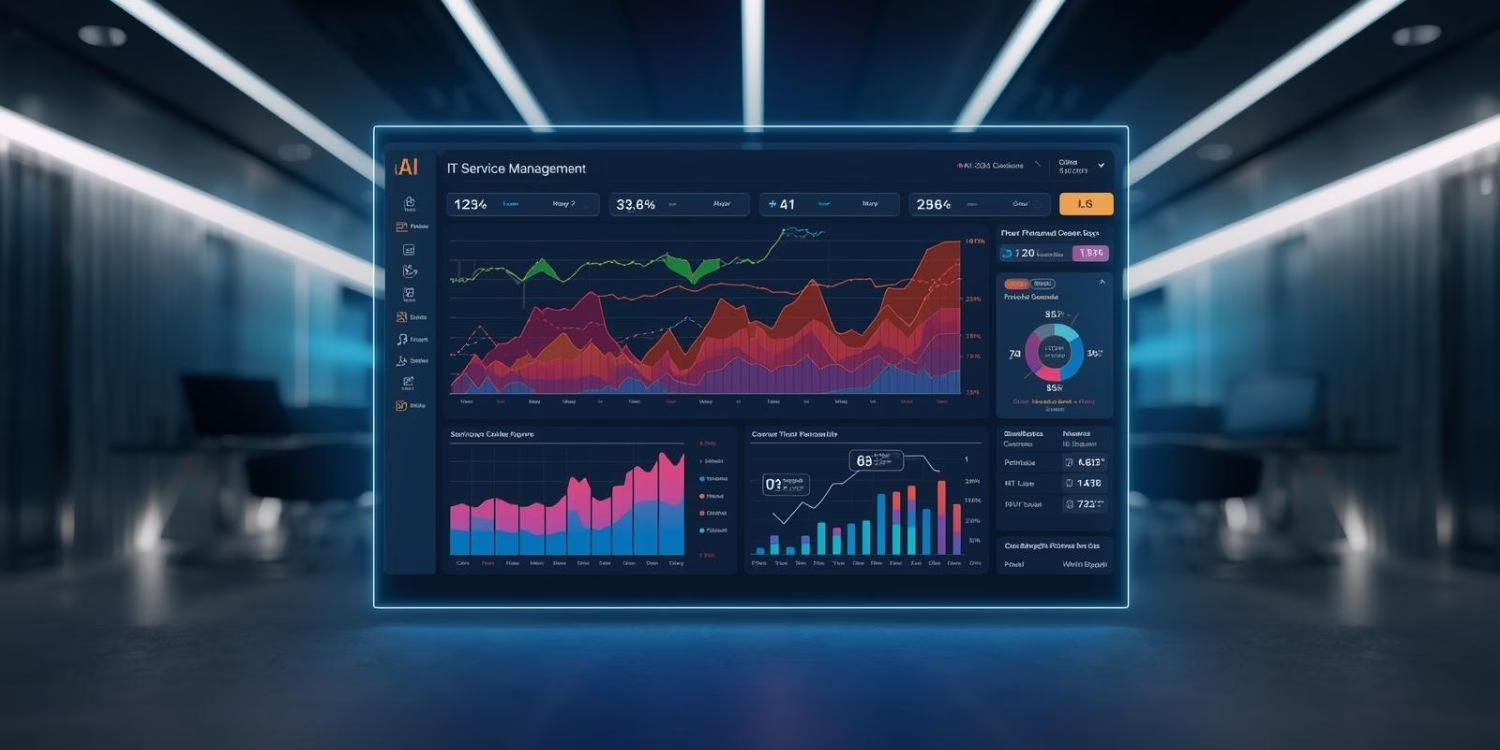
Technology environments are becoming more complex as businesses adopt cloud platforms, remote work solutions, and advanced cybersecurity tools. Traditional IT service management (ITSM) approaches often struggle to keep pace with this growing complexity. Today, AI is revolutionizing IT service management by introducing automation, predictive monitoring, and faster support capabilities that transform how IT teams operate.
Artificial intelligence is not replacing IT professionals – it’s empowering them. By automating repetitive tasks and providing real-time insights, AI enables IT teams to focus on strategic initiatives instead of constantly reacting to issues.
Why Traditional IT Service Management Is Evolving
Traditional ITSM models rely heavily on manual ticket handling, reactive troubleshooting, and time-consuming system monitoring. As businesses scale, this reactive approach can lead to delays, inefficiencies, and increased downtime.
Common challenges include:
- High volumes of repetitive support tickets
- Delayed issue detection
- Inconsistent response times
- Limited visibility into system performance
- Difficulty predicting future problems
AI-driven tools address these challenges by shifting IT operations from reactive to proactive.
How AI Is Revolutionizing IT Service Management
The impact of artificial intelligence on IT service management is significant. Below are key ways AI is revolutionizing IT service management across modern organizations.
1. Automated Ticket Management
One of the most immediate benefits of AI in ITSM is intelligent ticket automation. AI-powered systems can categorize, prioritize, and route support tickets automatically.
This leads to:
- Faster ticket resolution
- Reduced workload for IT staff
- Improved response times
- Consistent handling of recurring issues
AI chatbots can also resolve common user requests – such as password resets or software access – without human intervention.
2. Predictive Monitoring and Issue Prevention
Rather than waiting for systems to fail, AI tools analyze patterns and detect anomalies that may indicate potential problems. Predictive analytics allows IT teams to address issues before they disrupt operations.
Predictive monitoring can:
- Identify unusual network activity
- Detect performance degradation
- Flag hardware failures in advance
- Recommend preventive maintenance
By identifying risks early, businesses reduce downtime and maintain operational continuity.
3. Intelligent Root Cause Analysis
Troubleshooting complex IT issues often requires identifying the underlying cause across multiple systems. AI-driven analytics can correlate data from various sources to pinpoint root causes more efficiently.
Benefits include:
- Faster diagnosis of technical problems
- Reduced mean time to resolution (MTTR)
- Improved accuracy in identifying issues
- Less reliance on trial-and-error troubleshooting
This capability enhances both efficiency and reliability.
4. Enhanced User Experience
AI-powered service desks improve the overall user experience. Chatbots and virtual assistants provide instant responses to common questions, reducing wait times and increasing satisfaction.
Users benefit from:
- 24/7 self-service support
- Instant troubleshooting guidance
- Personalized recommendations
- Seamless ticket tracking
When support becomes faster and more accessible, employee productivity increases.
5. Data-Driven Decision Making
AI systems collect and analyze large volumes of operational data. This data provides valuable insights that help IT leaders make informed decisions.
Analytics capabilities include:
- Identifying recurring issue trends
- Measuring service performance
- Forecasting resource needs
- Optimizing IT budgets
By leveraging these insights, organizations can improve long-term planning and align IT with business goals.
Security and Risk Management Improvements
Cybersecurity threats are becoming more sophisticated. AI enhances security monitoring by detecting unusual patterns and suspicious activity in real time.
AI-powered security tools can:
- Monitor user behavior anomalies
- Detect potential phishing attacks
- Flag unauthorized access attempts
- Support rapid incident response
As AI is revolutionizing IT service management, it also strengthens overall cybersecurity posture.
The Future of AI in IT Service Management
AI continues to evolve rapidly. Future advancements may include deeper integration with business analytics platforms, more advanced automation capabilities, and improved predictive modeling.
Organizations that embrace AI-driven IT service management gain:
- Greater operational efficiency
- Improved system reliability
- Reduced support costs
- Stronger security monitoring
- Enhanced scalability
The transition toward intelligent IT operations represents a significant step forward in digital transformation.
Conclusion
As technology environments grow more complex, businesses must adopt smarter solutions to manage IT effectively. AI is revolutionizing IT service management by automating repetitive tasks, improving response times, and enabling predictive monitoring.
By integrating AI into IT operations, organizations can reduce downtime, enhance user satisfaction, and make data-driven decisions that support long-term growth. The shift from reactive troubleshooting to proactive management empowers IT teams to deliver greater strategic value.
Transform Your IT Strategy with SwiftTech Solutions
SwiftTech Solutions offers advanced AI and Analytics services designed to enhance IT operations, improve decision-making, and strengthen system performance. Our team helps businesses implement intelligent solutions that drive efficiency and innovation. Call 877-794-3811 or email info@swifttechsolutions.com to explore how AI can transform your IT service management strategy.