
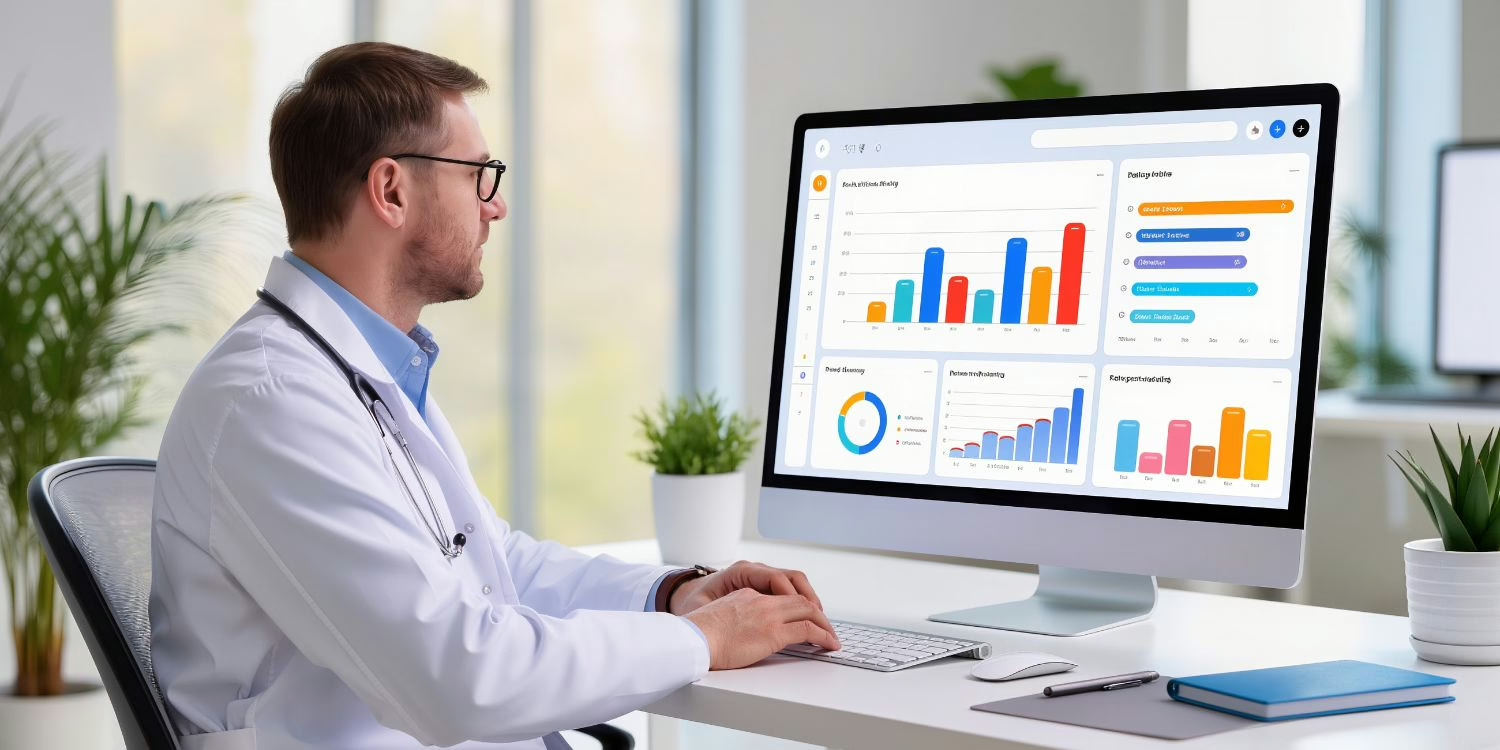
Healthcare organizations manage some of the most sensitive data of any industry. This includes patient records, billing information, and clinical systems that directly affect care delivery. As a result, protecting this data has become a top priority as cyber threats increase and regulations tighten. This is why managed IT services improve patient data security. Providers offer healthcare organizations proactive monitoring, compliance support, and layered protection that goes beyond basic IT support.
Unfortunately, many healthcare practices, especially small and mid-sized organizations, lack the internal resources to manage cybersecurity and compliance effectively. Managed IT services offer a structured, ongoing approach to safeguarding patient data. In turn, they allow providers to focus on patient care rather than technology risks.
Why Patient Data Security Is Critical in Healthcare
Patient data is valuable, regulated, and highly targeted by cybercriminals. As a consequence, a single breach can lead to regulatory penalties, operational disruption, reputational damage, and loss of patient trust. Healthcare organizations must comply with strict regulations such as HIPAA. These regulations require administrative, physical, and technical safeguards for electronic protected health information (ePHI).
Common challenges healthcare providers face include:
- Limited internal IT and security expertise
- Outdated systems or legacy applications
- Increased remote access and connected devices
- Growing ransomware and phishing threats
- Complex compliance requirements
In response, managed IT services address these challenges by delivering consistent security oversight and proactive risk management.
How Managed IT Services Improve Patient Data Security
Managed IT services take a holistic approach to healthcare security, focusing on prevention, detection, and response. Instead of reacting to incidents after damage occurs, providers gain continuous protection designed to reduce risk and support compliance.
1. Continuous Monitoring and Threat Detection
One of the most important ways managed IT services enhance security is through 24/7 monitoring. Cyber threats don’t follow business hours, and healthcare systems often run around the clock.
Managed IT monitoring helps by:
- Detecting suspicious activity in real time
- Identifying unauthorized access attempts
- Monitoring network traffic and endpoints
- Alerting teams before issues escalate
Ultimately, early detection significantly reduces the impact of potential breaches and system disruptions.
2. Strong Access Controls and Identity Management
Unauthorized access is a leading cause of healthcare data breaches. Managed IT services help healthcare organizations implement and maintain strong access controls. These controls limit who can view or modify sensitive information.
These controls typically include:
- Role-based access based on job responsibilities
- Multi-factor authentication (MFA)
- Unique user accounts with secure password policies
- Regular access reviews and cleanup
By doing so, organizations reduce insider and external threats by ensuring only authorized users have access to patient data.
3. HIPAA-Aligned Security and Compliance Support
HIPAA compliance is an ongoing process, not a one-time checklist. Managed IT services help healthcare organizations align their technology environment with HIPAA Security Rule requirements.
Compliance-focused support includes:
- Risk assessments and gap analysis
- Security policy implementation and updates
- Audit logging and reporting
- Documentation support for audits and reviews
Consequently, this proactive compliance approach reduces the risk of violations and regulatory penalties while strengthening overall security.
4. Endpoint Security and Device Management
Healthcare environments rely on a wide range of devices, including workstations, laptops, tablets, and sometimes medical equipment connected to networks. Each device represents a potential entry point for threats.
Managed IT services improve endpoint security by:
- Deploying antivirus and endpoint detection tools
- Ensuring regular patching and updates
- Monitoring device health and activity
- Enforcing encryption on mobile and portable devices
As a result, these measures help prevent malware infections and unauthorized data access across the organization.
5. Secure Data Backup and Disaster Recovery
Data availability is just as important as data protection in healthcare. Patient care depends on access to accurate, up-to-date information, even during outages or cyber incidents.
Managed IT services support resilience through:
- Automated, encrypted backups
- Offsite and cloud-based storage
- Ransomware-resistant backup strategies
- Regular backup testing and recovery planning
Therefore, these measures help restore patient data quickly if a system compromise occurs.
6. Email Security and Phishing Protection
Phishing attacks remain one of the most common entry points for healthcare breaches. Staff may receive emails that look legitimate but attempt to steal credentials or deliver malware.
Managed IT services help reduce this risk by:
- Filtering malicious emails
- Blocking suspicious links and attachments
- Implementing email authentication protocols
- Supporting user awareness and training
Consequently, reducing phishing risk protects both patient data and internal systems.
7. Vendor and Third-Party Risk Management
Healthcare organizations frequently collaborate with billing providers, cloud platforms, and software vendors that may have access to patient data. Managed IT services help assess and manage third-party risks.
This includes:
- Reviewing vendor security practices
- Supporting Business Associate Agreements (BAAs)
- Limiting third-party access where possible
- Monitoring external connections
Overall, strong vendor oversight reduces exposure beyond internal systems. beyond internal systems.
8. Proactive IT Management Reduces Human Error
Human error is a major contributor to healthcare data incidents. Managed IT services help reduce errors by standardizing processes, automating updates, and reinforcing best security practices.
Proactive management leads to:
- Fewer misconfigurations
- Consistent security enforcement
- Faster issue resolution
- Improved staff confidence in technology
In the end, well‑managed systems help employees work more securely and efficiently.
Conclusion
Healthcare organizations face growing pressure to protect patient data while maintaining operational efficiency and regulatory compliance. By taking a proactive, structured approach, managed IT services improve patient data security. They do this through continuous monitoring, strong access controls, compliance alignment, and advanced threat protection.
Ultimately, healthcare providers gain a trusted framework that supports both security and patient care.
Partner with a Trusted Healthcare IT Company in Orange County
SwiftTech Solutions is a leading healthcare IT company in Orange County. We help medical practices and healthcare organizations protect patient data, maintain compliance, and reduce cybersecurity risk. We build our managed IT services specifically for healthcare environments where security and reliability matter most.
Contact us today at 877-794-3811 or email info@swifttechsolutions.com to learn how SwiftTech Solutions can strengthen your healthcare data security strategy.