
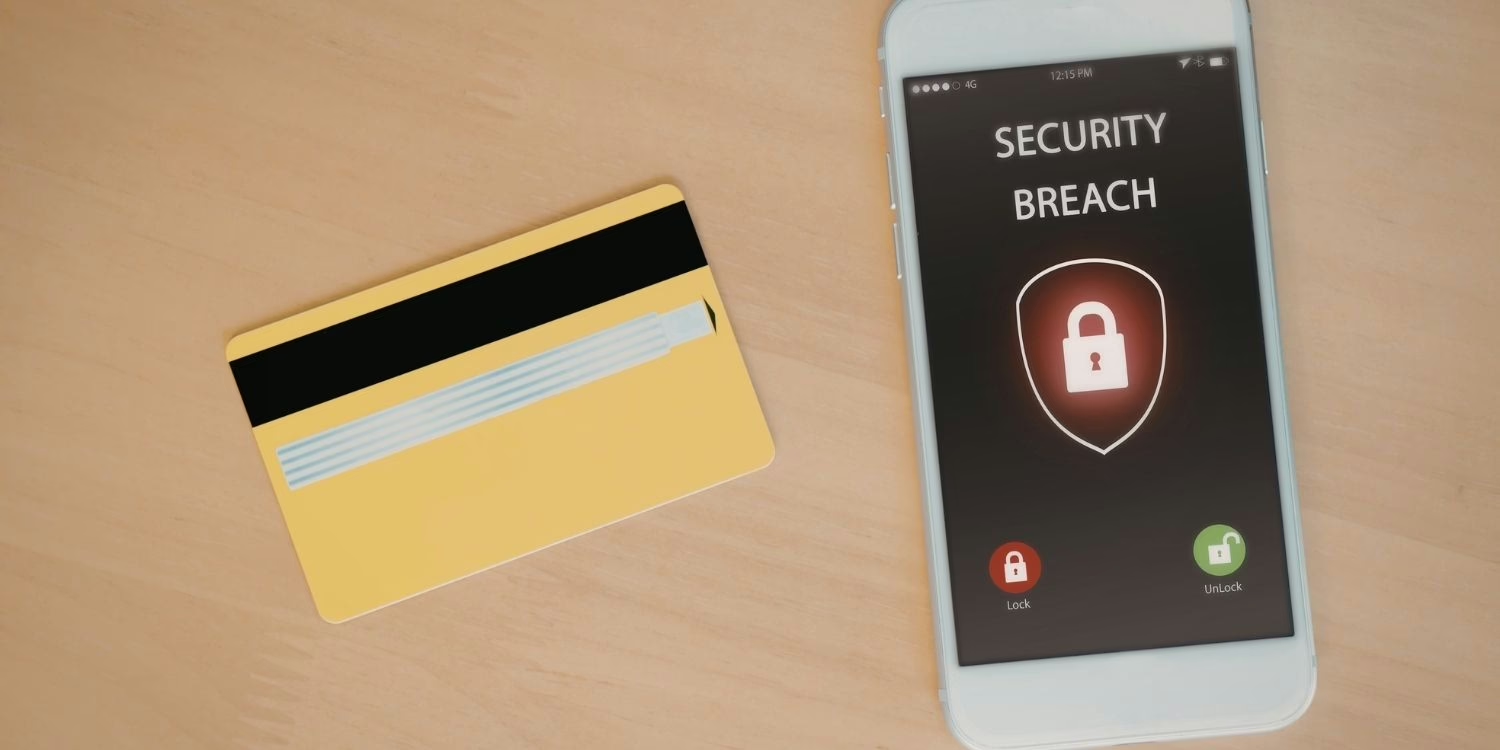
The true cost of a data breach goes far beyond the immediate panic of “we’ve been hacked.” For most businesses, the bill shows up in many places at once: operational downtime, forensic investigations, legal fees, customer notifications, regulatory penalties, lost sales, higher insurance premiums, and long-term reputational damage. When you add it all up, a breach can cost multiples of what companies think they’re risking – especially small and mid-sized organizations that don’t have deep reserves. The good news is that investing in professional cybersecurity services is one of the most reliable ways to prevent these losses and protect your revenue, reputation, and future growth.
Why data breaches are so expensive now
According to IBM’s Cost of a Data Breach research, the global average breach cost is around $4.4 million, and U.S. breaches are significantly higher, exceeding $10 million on average in recent reporting. Even when industries see small year-to-year dips, the overall trend is clear: breaches remain one of the most expensive business disruptions companies can face.
What’s driving costs up?
- More sophisticated ransomware and extortion tactics
- Supply-chain and cloud exposures
- AI-accelerated phishing and social engineering
- Longer recovery timelines and stricter compliance oversight
The direct costs: what you pay immediately
These are the line items that hit first – typically within days or weeks of discovery.
1. Incident response and forensics
You need specialists to confirm what happened, how deep it goes, and how to stop it. External IR retainers, forensic investigation, and emergency consultants add up fast.
2. Containment and recovery
Rebuilding servers, restoring backups, re-imaging endpoints, and re-securing cloud tenants takes labor and time. If recovery isn’t clean, the attacker may return.
3. Legal fees and regulatory fines
Organizations can face lawsuits from customers, partners, or employees, plus penalties under frameworks like HIPAA, GDPR, PCI-DSS, or state privacy laws.
4. Customer notification and credit monitoring
Many jurisdictions require formal notification. Mailing, call centers, and monitoring subscriptions can cost hundreds of thousands even for mid-sized breaches.
These direct expenses are painful – but they’re often not the biggest part of the final bill.
The hidden costs: where the real financial damage lives
This is the part leaders underestimate. The true cost of a data breach is usually driven by indirect losses that can linger for months or years.
1. Downtime and operational disruption
If your systems are down, revenue stops. For healthcare, downtime can delay care. For professional services, it blocks deliverables. Even short outages create a ripple effect across staffing, supply chains, and customer commitments.
2. Lost customers and churn
After a breach, some customers don’t come back. The brand trust hit can reduce renewals, subscriptions, and referrals. IBM consistently shows “lost business” as one of the largest breach cost categories.
3. Slower sales cycles
Prospects ask tougher security questions, deals stall in procurement, and competitors weaponize your breach in pitches. That drag is hard to quantify – but very real.
4. Higher cyber-insurance premiums (or denial)
Post-breach renewals can jump sharply, with tighter requirements. Some insurers deny coverage without mature controls.
5. Productivity loss and burnout
Internal teams lose weeks to emergency response, audits, and remediation instead of working on growth projects. Morale suffers, turnover rises, and recruiting costs follow.
Put together, these hidden layers often exceed the initial recovery spend.
A simple way to think about breach ROI
Imagine a mid-sized business with $30M annual revenue. A breach costs it:
- $500K–$1M in direct response and technical recovery
- $1M–$2M in downtime and delayed revenue
- $1M+ in lost customers and brand erosion
- Unknown long-tail costs in insurance and compliance
Even a “moderate” breach can create a multi-million-dollar hole that takes quarters to refill. In other words, prevention is not an expense – it’s financial risk management.
How cybersecurity services save you money (before and after a breach)
Professional security services reduce both breach likelihood and breach impact. That’s how they protect your bottom line.
1. Proactive risk assessments close doors early
A structured vulnerability assessment and remediation plan typically prevents the most common breach paths: unpatched systems, misconfigured cloud storage, weak identity controls, and exposed remote access.
2. Strong identity and access management (IAM)
Many breaches begin with compromised credentials. Security services harden accounts using MFA, conditional access, least-privilege, and monitoring – cutting off attackers at the first step.
3. 24/7 monitoring and Managed Detection & Response (MDR)
The faster you detect and contain, the lower the cost. IBM data shows long detection windows inflate losses, while rapid containment reduces overall damage. MDR teams watch for anomalies, isolate threats early, and stop lateral movement before it becomes catastrophic.
4. Security awareness training
Human error fuels phishing and credential theft. Regular training reduces click-through rates and helps staff report suspicious activity quickly.
5. Backup, disaster recovery, and ransomware readiness
A tested backup and recovery program can be the difference between a 2-day disruption and a 2-month crisis. It also reduces the chance you’ll ever need to pay ransom.
6. Incident response planning
When a breach happens, chaos is expensive. Having a playbook, defined roles, and a prepared response partner avoids delays, mistakes, and downtime – major cost multipliers.
Final takeaway
The true cost of a data breach includes far more than emergency IT work. The biggest losses come from downtime, reputation damage, compliance exposure, and long-term customer churn. In that context, investing in cybersecurity isn’t a cost center – it’s a measurable way to avoid multi-million-dollar risk and keep your business resilient.
Protect your organization before a breach becomes a headline. Our cyber security service Orange County help you prevent attacks, detect threats early, and reduce financial risk. Contact us today at 877-794-3811 or email info@swifttechsolutions.com.